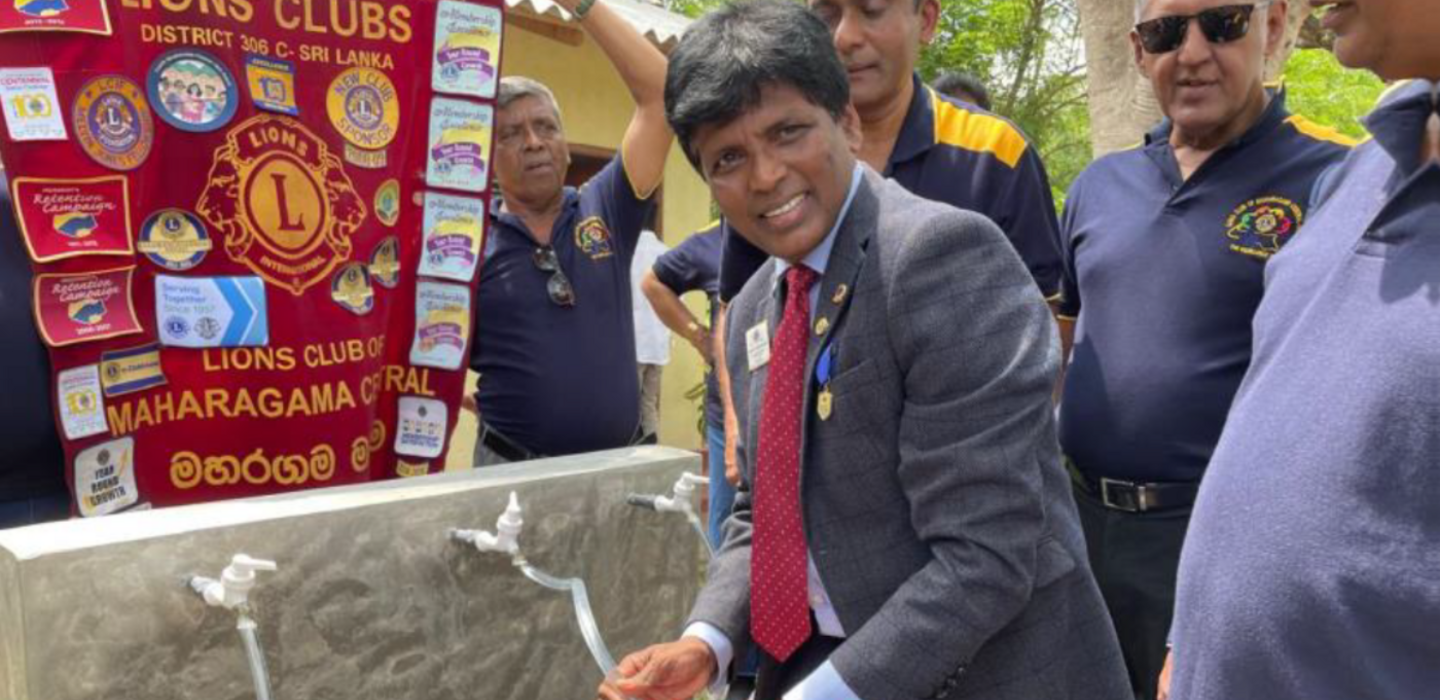
The Maharagama Central Lions Club recognized a pressing need that had been affecting their community for decades and established a reverse osmosis (RO) plant in Anuradhapura district in the North Central Province. With the support of external partners, they were able to make a meaningful difference in the lives of people of all ages, creating a positive impact that will benefit future generations as well.
Q: What was the motivation behind organizing your club’s service project? Was there a specific event or need in your community?
A: The endemic of chronic renal failure in Sri Lanka emerged in 2002, primarily affecting the farming provinces. In the North Central Province, a major agricultural region relying on reservoir-based cascade irrigation, chronic renal failure has reached crisis proportions. Over 5,000 patients in this area are currently receiving treatment for the disease. The root cause of this alarming health issue stems from long-term exposure to heavy metals through diet, compounded by naturally high fluoride levels in drinking water, along with the neglect of routine reservoir de-silting over the past two decades.
Chronic renal failure has become a global public health concern, and in Sri Lanka’s North Central Province, the prevalence of end-stage renal failure is now nearing epidemic levels. At this advanced stage, the only life-sustaining options are dialysis or kidney transplantation. Unfortunately, the disease often remains undetected until it reaches its end stage, leading to missed opportunities for prevention.
The high cost of treatment, combined with the incurable nature of the disease, results in significant suffering, not just for the patients, but also for their families, whose development is hindered by the burden of care and medical expenses.
To combat this endemic in a sustainable manner, it is essential to ensure access to safe drinking water and address the issue at its root as early as possible. One critical step in this direction is the implementation of more reverse osmosis plants to guarantee access to clean, safe water from an early age. Providing safe water, especially for children, is vital to prevent the health risks that contribute to the development of chronic renal failure. By safeguarding the health of children – our future generation – we can foster their development and create a healthier, more prosperous society for all.
Q: Who directly participated in the project, and what help did the project receive from other clubs, organizations and members of the community?
A: Our project chairperson, Lion Nilan Weerasingha, along with all members of the Maharagama Central Lions Club, worked collaboratively to ensure the successful execution of the project.
This project involves the installation of an RO plant with a capacity of 7,000 liters per day, which will serve approximately 3,500 people, benefiting both the students (250) and surrounding local families from two nearby villages. The Maharagama Central Lions Club will cover all ongoing maintenance expenses to ensure the plant’s long-term sustainability. The plant is expected to have a lifespan of about 20 years.
The total cost of the project was approximately 5.5 million Sri Lankan rupees (55 lakhs), which covers the purchase, installation and initial setup of the RO plant. The financial contributions were generously provided by Lion Nilan Weerasingha and Lion Lady Priyangi Weerasinghe. The local school provided essential coordination and a secure, suitable location for the installation, along with supplying electricity to support the plant’s operation.
Q: When did you learn about the need in your community and realize that your service project could address this need?
A: Before implementing the project, we conducted a thorough needs assessment to identify the key issues facing the community. This detailed analysis helped us understand the specific challenges, gaps and requirements that needed attention. Initially, the project was proposed to install an RO plant for the school only. However, after reviewing the results of the needs assessment and considering the broader community’s needs, we recognized a significant demand for safe drinking water from the surrounding area. As a result, we expanded our plan to install a high-capacity RO plant that would serve not only the schoolchildren but also the residents of two nearby villages. This structured approach allowed us to align the project with the actual needs of the community, ensuring meaningful and sustainable improvements.
Q: How did your club organize the project? Did you utilize resources from Lions Clubs International or other external sources?
A: To successfully implement the project, our club followed a structured approach to planning and execution. We began by defining clear objectives and developing a detailed action plan to ensure smooth coordination and maximum impact. We leveraged resources and guidelines from Lions Clubs International, including strategic frameworks, funding opportunities and expert guidance, to align our project with the organization’s global service priorities. Additionally, we collaborated with external partners, such as local businesses, government agencies and community organizations to secure additional support in the form of funding, materials and volunteer participation. Our team distributed responsibilities efficiently, ensuring smooth execution and ongoing monitoring. By combining Lions Clubs International resources with external partnerships, we successfully addressed the community’s needs in a sustainable and impactful way.
Q: What were the outcomes of your service project? What impact has it had on the community, and did it meet the expectations your club had for its results?
A: We installed a high-capacity RO plant to serve both the schoolchildren and the residents of two villages. To ensure regular maintenance and water distribution, a student was appointed to oversee the responsibilities, receiving a service payment of Rs. 7,000, which constitutes one-fourth of the revenue generated from providing water at a subsidized rate. This payment not only helps the student meet his personal needs, it also provides an opportunity to develop valuable skills for the future.
In addition to the RO plant, Lion Nilan Weerasingha generously provided water bottles to the schoolchildren during the opening ceremony. The project also led to the expansion of our service initiatives, including the construction of a new school building with two classrooms, which was completed and handed over in January 2025. We also provided a scholarship to a student at the school, who excelled in their Ordinary Level (OL) examination, achieving nine distinctions across all subjects. Furthermore, the initiative continues to support the student with a monthly scholarship of Rs. 5,000.
Our primary focus was to ensure access to safe water for both the children and the community, aiming to address the critical health issue of chronic renal failure by implementing preventive measures early and tackling its root causes. The Lions club has committed to maintaining the plant for approximately 20 years, covering the semiannual maintenance cost of Rs. 50,000. This commitment ensures the project’s long-term sustainability, making it a lasting initiative and a meaningful legacy for the community.
The successful completion of this project has greatly enhanced the public perception of the Lions club, highlighting its unwavering commitment to the community and fostering a positive image. This initiative has not only addressed a critical need but also demonstrated the club’s dedication to making a meaningful impact, further strengthening its reputation as a trusted and proactive organization in community development.
To learn more about our Kindness Matters Service Award winners, please visit our website.
Humia Samad is a program specialist for Lions Clubs International.
